


Release 10.0.46 introduces a performance-focused enhancement to the Trial Balance reporting experience through the implementation optimized measures. The primary goal is to improve report responsiveness, reduce memory usage, and deliver a smoother user experience while maintaining the same trusted financial results.
The optimized measures have been incorporated into the existing Trial Balance framework to streamline how balances are calculated and displayed. There are no changes to report layout, navigation, or interpretation. Users benefit from faster report loading, smoother interactions, and improved responsiveness when working with Trial Balance reports, particularly in environments with large General Ledger data volumes.
Trial Balance Measure Optimization
The calculation logic for Trial Balance was updated by optimizing the existing DAX measures responsible for Opening Balance, Debit, Credit, Net Change, and Closing Balance. The new approach replaces longer calculation patterns with streamlined logic while preserving financial accuracy. Please refer the General Ledger – Trial Balance Measures document for detailed guidance on the updates, including a comparison of the existing measures versus the optimized measures.
All Trial Balance calculations were validated to confirm that results produced by the optimized measures match those generated by the previous implementation. Balances, totals, and aggregations remained consistent across all reporting scenarios. Functionally, the revised measures behave exactly the same as the earlier measures, with no change in financial interpretation.
Model Publishing and Report Connection
After the optimized Trial Balance measures were implemented, the updated data model was published and integrated with the General Ledger reports. Auto Date Table behavior was disabled to improve performance and maintain controlled date handling. During validation, certain discrepancies in date usage and visual rendering were identified and corrected. Final testing confirmed that calculations, visuals, and interactions performed accurately across all Trial Balance views.
Performance Improvements
Performance Analyzer was used to validate the impact of the optimized Trial Balance measures after model publishing and report correction. A comparison between the pre- and post-optimization states shows a clear reduction in visual execution time and improved report responsiveness. Reports now load an average of 52% faster and interactions are smoother, particularly with large General Ledger datasets.
The Before view reflects the earlier Trial Balance implementation with the Auto Date Table enabled and longer measure logic. The After view shows optimized measures with the Auto Date Table behavior disabled, resulting in reduced execution time, faster rendering, and improved performance.
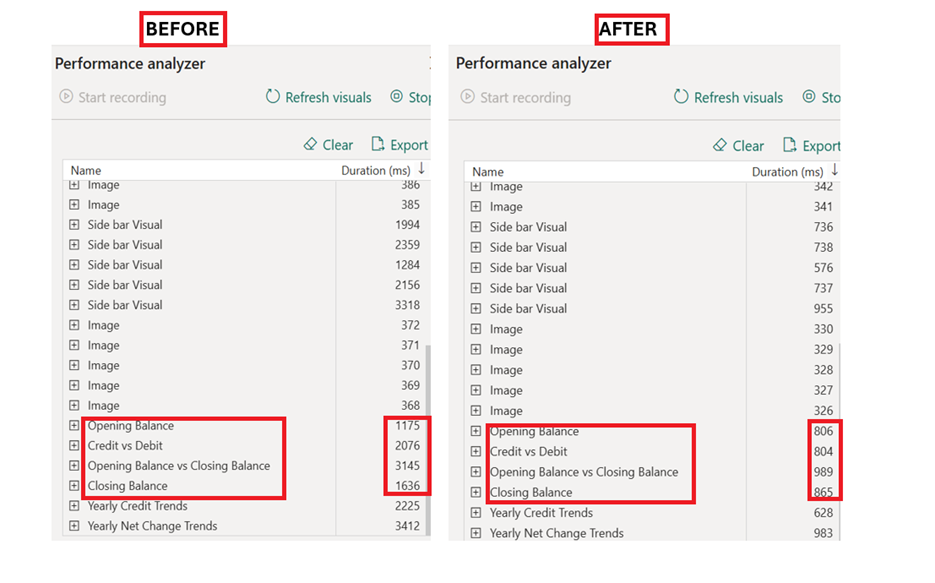
By optimizing the Trial Balance calculation logic and disabling the Auto Date Table behavior, the model size is reduced and calculation efficiency is improved without impacting financial accuracy. Performance Analyzer validation confirms faster report loading, reduced execution time, and smoother visual interaction. This enhancement delivers a more efficient, scalable, and reliable Trial Balance reporting experience that supports timely financial analysis and better business decision-making.
Post your comment on this topic.